
Finding People in DeKalb County Records
A useful DeKalb County people lookup begins with the record type most likely to hold the known fact. A full name can lead into deeds, court dockets, professional licenses, business filings, or probate. An address works in the opposite direction: Property Appraisal identifies a parcel and assessed owner, then the deed index supplies the recorded parties. A year and family link may point to probate, a death index, an obituary, or a city directory. Phone-only research is less direct because public offices publish official contacts, not a countywide resident phone book.
Do not treat the first name match as proof. DeKalb County contains Atlanta neighborhoods, Decatur, many other cities, and large unincorporated areas. Compare a result's date, party role, parcel, address, and related names. A deed grantee may not occupy the property. A court party may be someone else with the same name. The search becomes sound when two independent records agree.
- Write down the full name, spelling variants, approximate dates, and any known DeKalb County address.
- Use owner, deed, or court name search based on the strongest known fact.
- Record the parcel ID, deed book and page, case number, or other stable file key.
- Check a second official source for the same name, place, and time.
- Ask the correct clerk, archive, or library for records that are not online.
Note: My Voter Page is an authenticated self-check, not an open name browser for other people.
DeKalb County People Search Record Keepers
Three DeKalb County offices form the core of a local name search. The Clerk of Superior Court records real-estate instruments and keeps Superior Court files. Property Appraisal connects owners, mailing addresses, parcels, values, and property traits. Court clerks maintain dockets and copies for their own divisions. City clerks remain important because a municipal permit, council record, or ordinance case belongs to the city that created it, not automatically to the county.
Clerk of Superior Court
556 North McDonough Street
Decatur, GA 30030
404-371-4901
Court and real-estate records
Real Estate Division
DeKalb County Courthouse
Decatur, GA 30030
404-371-2836
Property Appraisal
County assessment records
DeKalb County, Georgia
Owner, address, parcel
The detailed access rules, copy charges, and request process belong with the DeKalb County public records system. For people-finding work, note which office produced each result and keep its file key.
Seven DeKalb County Landmark Search Routes
The Clerk's Landmark Web Official Records Search offers more than a simple surname box. Its online index begins in 1979 and runs to the current date. Name searching is often the best first route, but the clerk explicitly advises trying every spelling variation. Document type, book and page, parcel ID, recording dates, instrument number, and legal-description text can recover an item missed by a name query.
The official Landmark landing screen shows those distinct paths:
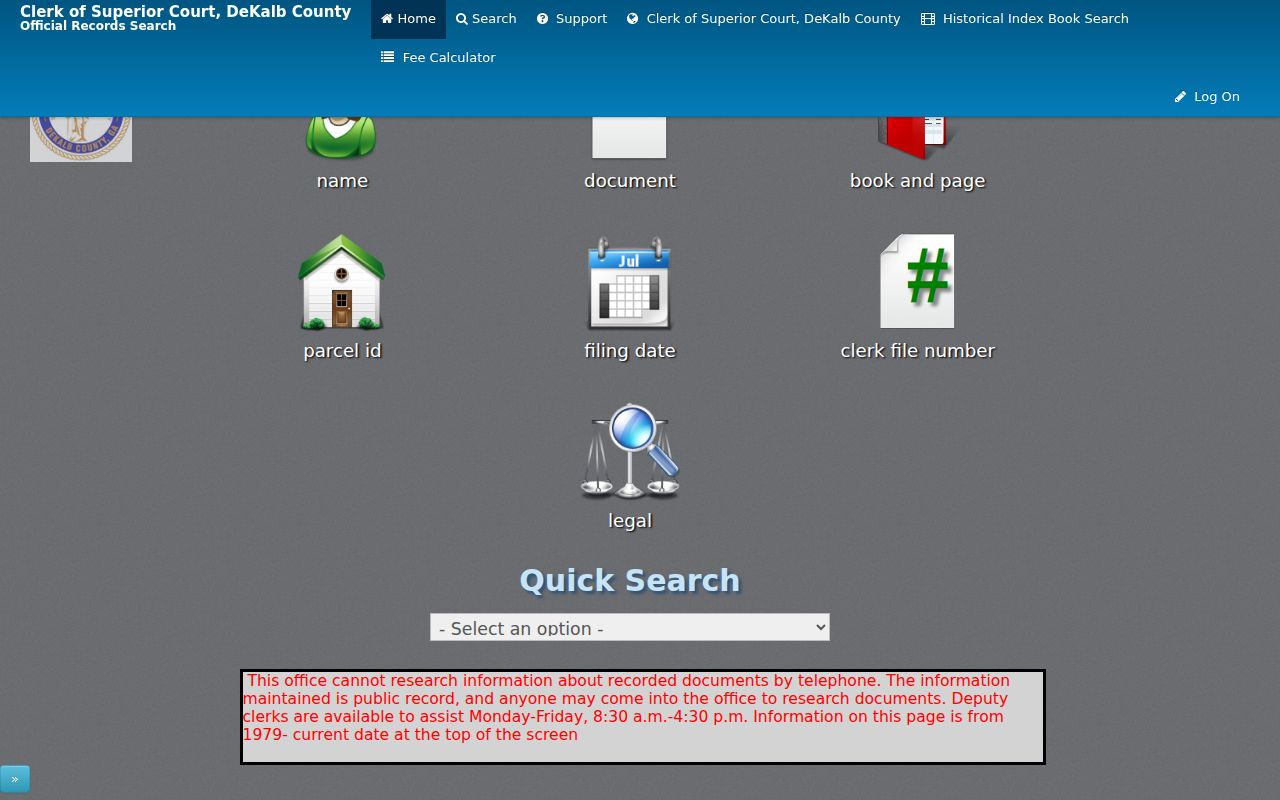
This range of search modes makes a known parcel or book/page just as useful as a person's name. A result can identify parties, the instrument type, recording date, and a stable reference for ordering a copy.
| Landmark route | Best known fact | How it helps |
|---|---|---|
| Name | Party surname or entity | Find grantors, grantees, and other indexed parties |
| Book/Page | Recorded citation | Go to one instrument reference |
| Parcel ID | Property account | Bridge appraisal and deed records |
| Date range | Approximate transaction period | Narrow common names |
| Instrument or legal | File number or land terms | Recover a record without a clean name match |
DeKalb County Address-to-Owner Search
An old or current address can lead to a person even when the surname is unknown. Start with the county's Property Appraisal search. It accepts a parcel ID, street address, or owner name and opens current and historical assessments and property characteristics. The appraisal gateway makes that owner, address, and parcel link visible:
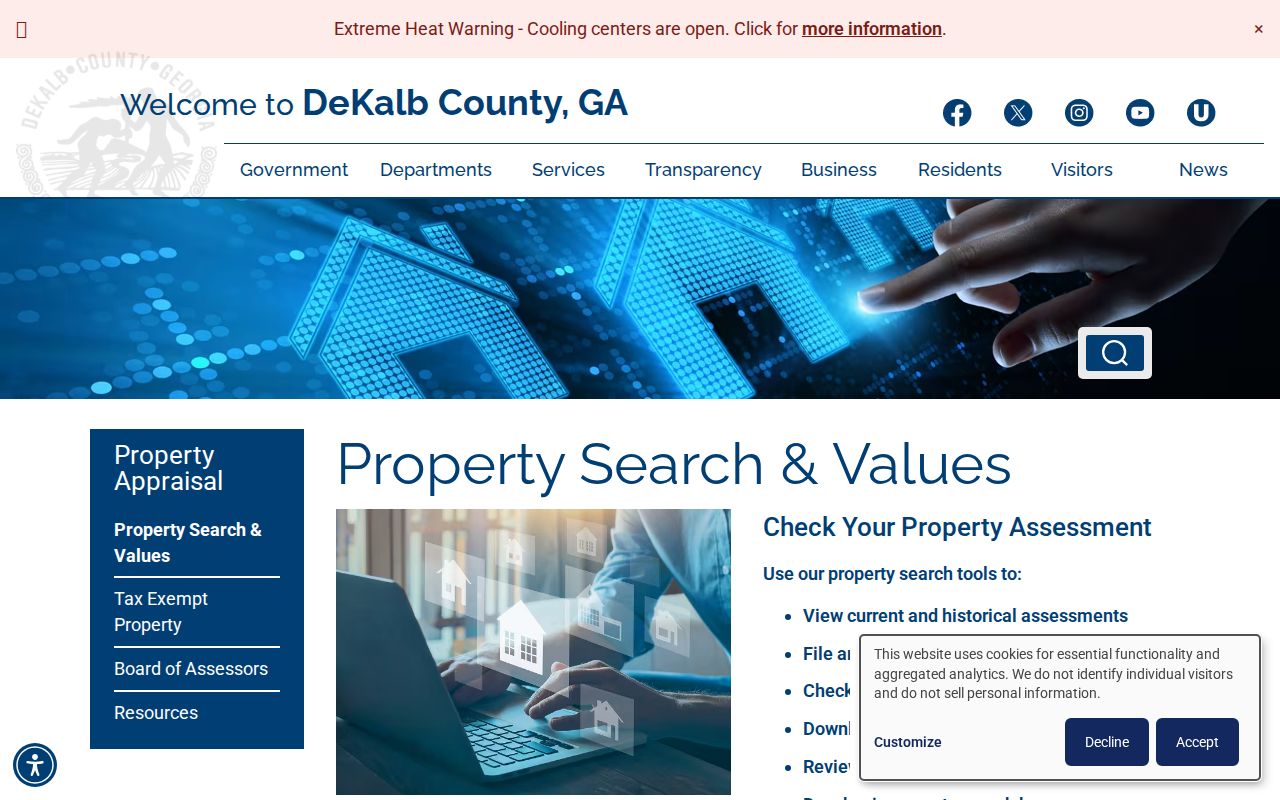
A parcel profile may show the assessed owner, mailing address, situs address, parcel number, legal description, values, exemptions, sales, and building traits. Situs means the physical location of the land. The mailing address is where tax notices go. They may differ, and neither alone proves where a person now lives.
- Parcel ID
- The county's stable identifier for a tax parcel.
- Situs address
- The physical location assigned to the property.
- Book and page
- The recorded citation used to retrieve a deed or plat.
- Grantor and grantee
- The parties transferring and receiving an interest in a recorded instrument.
Note: An assessment roll is dated tax evidence, while a recorded deed is the instrument used to confirm a conveyance.
DeKalb County GIS Extends the Search
Property Appraisal gives the account. The DeKalb County GIS Hub adds parcel boundaries, tax districts, address verification, and links to permit systems. It can also help identify the latest deed or plat book and page. GIS does not supply the deed, plat, or survey copy. Once the citation is known, the Clerk's Real Estate Division is the next stop.
The county GIS gateway collects these parcel and address tools:
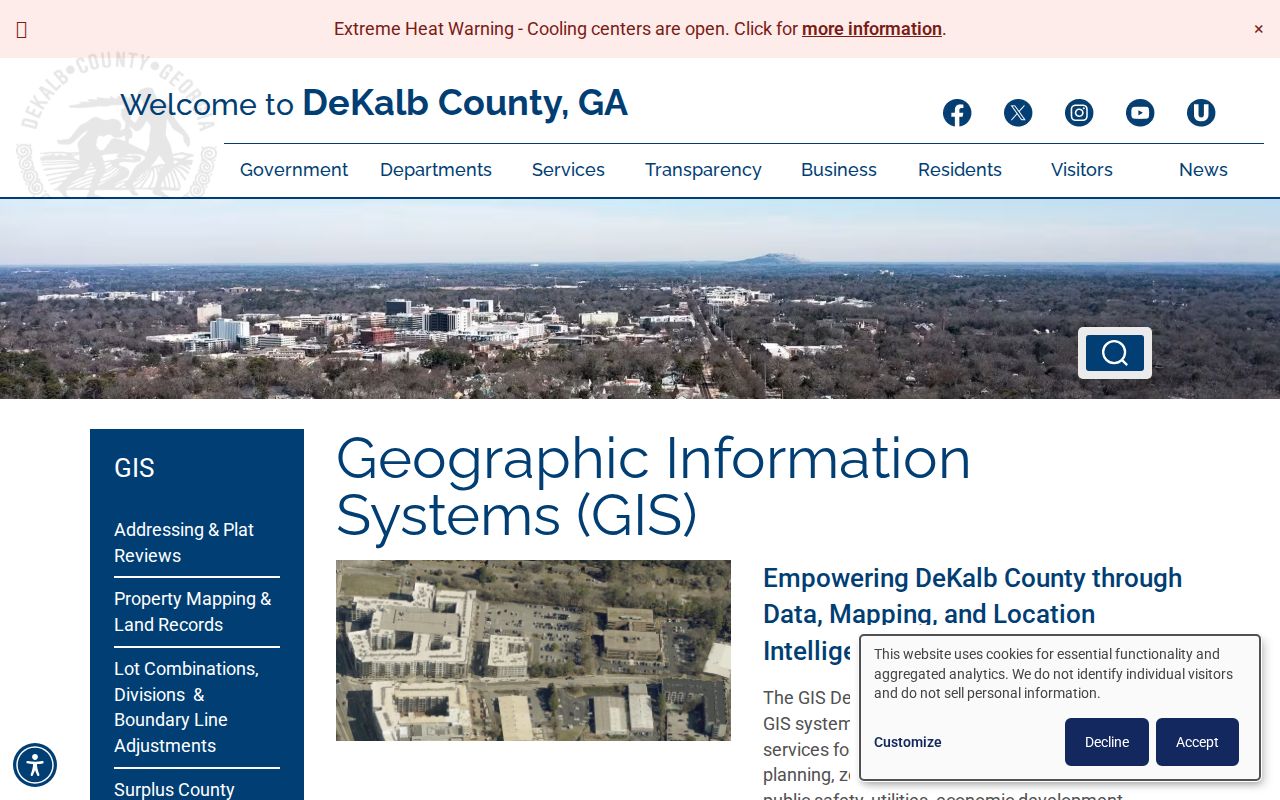
The map also helps resolve jurisdiction. An Atlanta postal address may still be in DeKalb County, while a Decatur mailing label does not by itself prove that the property lies within Decatur city limits. Check the tax district and incorporated boundary before sending a city records request.
Use DeKalb County records only for lawful personal research. Never use an address or identity result to stalk, harass, threaten, or evade a protective order.
Searching DeKalb County Court Records
DeKalb County court records are divided among Superior, State, Magistrate, Probate, Juvenile, and municipal courts. Superior Court handles felonies, divorce, title disputes, and broad civil matters. State Court covers misdemeanors and civil cases within its authority. Magistrate Court includes small claims, warrants, and preliminary matters. Probate files can identify a decedent, petitioner, executor, administrator, and public estate events.
The county's Judicial System gateway maps the divisions and directs searchers to docket access:
A docket is the index of events in a case, not the entire file. It may show party roles, a case number, filing date, judge, counsel, status, hearings, and event descriptions. Ask the right clerk for a plain or certified copy by case number and document date. Sealed matters, juvenile files, adoption records, and protected identifiers are not expected in an open search.
| DeKalb court source | Names it may show | Access route |
|---|---|---|
| Superior Court | Parties, counsel, judgments | Clerk docket and courthouse |
| State and Magistrate | Civil, misdemeanor, claim, and citation parties | Benchmark search and clerk |
| Probate Court | Decedents and estate representatives | Probate clerk inquiry |
| Municipal courts | Ordinance and traffic defendants | Each city's court clerk |
| Northern District of Georgia | Federal case parties | PACER or courthouse terminal |
DeKalb County Vital Records Search Paths
Current vital certificates are not an open people directory. The DeKalb local vital-record office and Georgia Department of Public Health handle certified birth and death requests for entitled applicants with identification. DeKalb Probate Court issues marriage licenses and copies. The Clerk of Superior Court keeps divorce case files, while DPH provides a basic divorce verification rather than the full court file.
The state request page sets out the certified-record ordering channels:
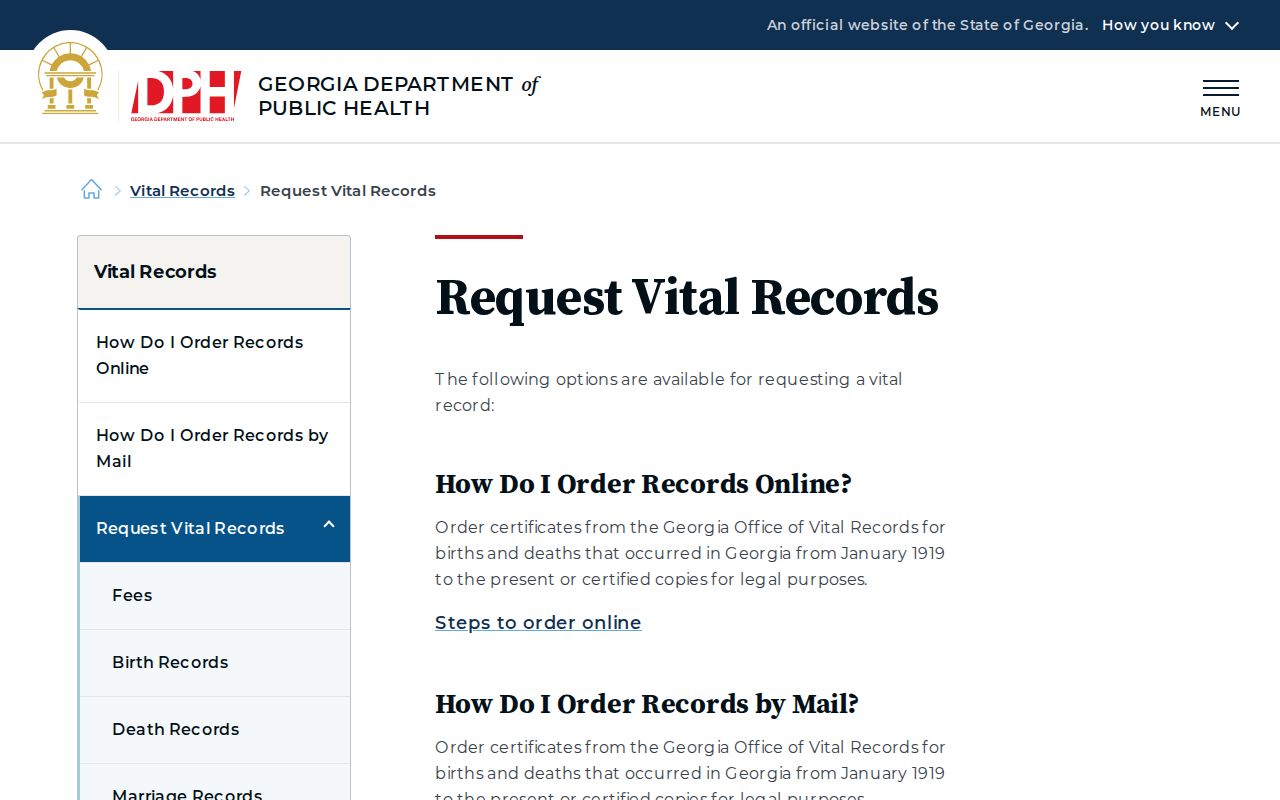
For family history, Georgia Archives provides historical death certificates for 1919 through 1943, and other indexes cover selected periods. The Decatur Library also holds the Georgia Death Index, marriage and divorce registers, cemetery records, and obituary tools. Do not invent a broad closure period. Eligibility depends on the record and the official application rules.
Note: A DPH verification and a certified Superior Court divorce decree are different documents with different uses.
DeKalb County Genealogy Records Go Offline
Many DeKalb County people searches reach a date before modern web coverage. The Decatur Library's second-floor Reference Desk holds print and microfilm directories dating to 1928, though staff must confirm exact volumes and gaps. Its microforms include Georgia census schedules, Sanborn maps, the Georgia Death Index, marriage and divorce registers, and Decatur Cemetery records. HeritageHub adds obituary and death-notice searching.
Older and wider trails continue at Georgia Archives, the National Archives at Atlanta, DeKalb History Center, and metro Atlanta library collections. City directories can supply a listed resident, spouse, trade, or employer between census years. Reverse, or criss-cross, directories begin with a street address rather than a surname. A directory entry shows what was published for that edition, not proof of present residence.
Search both “DeKalb County” and the historic place name. The county was formed in 1822, Fulton County was created in 1853, and later Atlanta annexations changed the correct record keeper. Parent-county records may be needed for events before DeKalb existed.
Build the historical trail in dated steps. Start with a known person and year, then record each directory edition, census sheet, deed citation, probate file, and obituary source. Search initials, spouse names, and alternate spellings. For a street-based search, compare an address-keyed directory with the parcel's legal geography because street names and numbers can change. A cemetery index or compiled family folder can point toward relatives, but the marker, sexton record, death certificate, or court file should confirm the link.
DeKalb Custody and Registry Checks
No verified official DeKalb County jail-roster URL was found in the research, so a county booking claim should not be built from lookalike sites. State and federal sources answer narrower questions. The Georgia Department of Corrections offender query covers records within its published scope. The Federal Bureau of Prisons locator covers federal custody from 1982 forward, not local jail custody.
The official federal inmate locator shows its number and name routes:
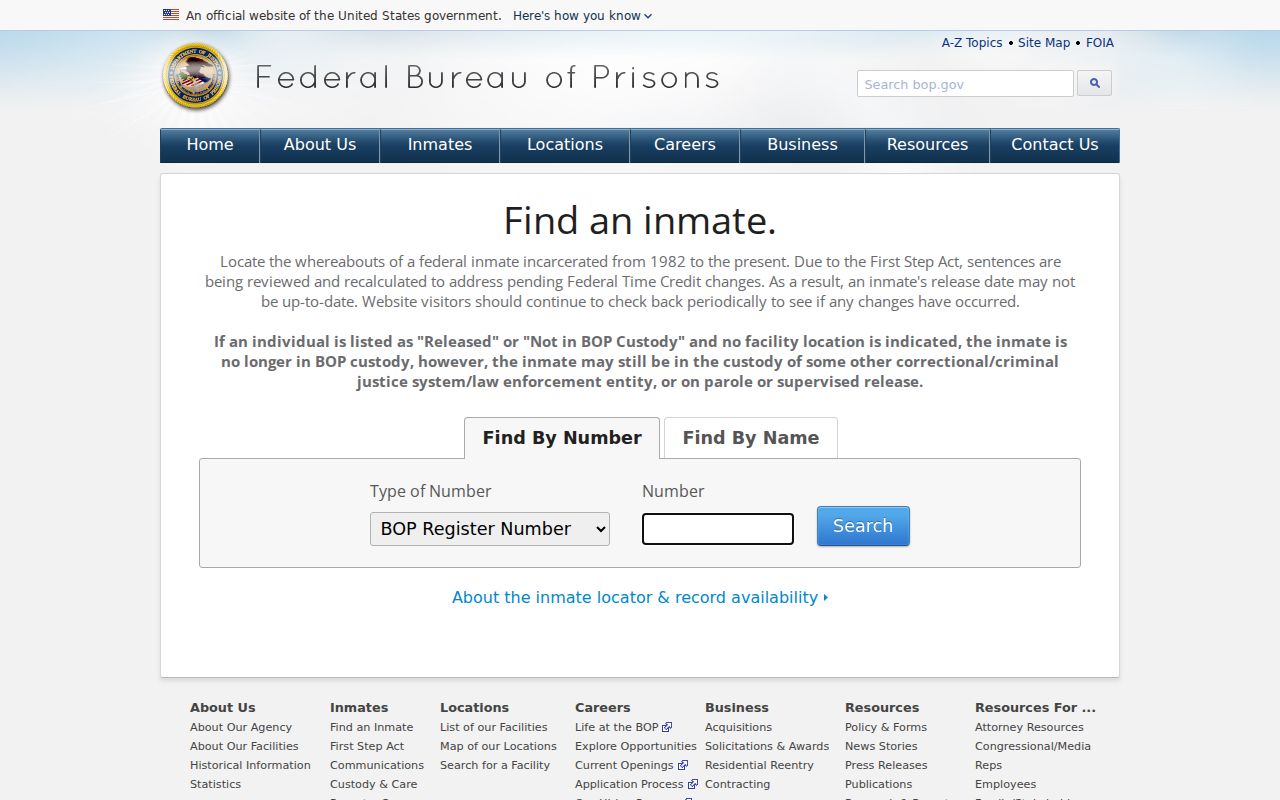
A custody entry is not a conviction. Read status, agency scope, and court disposition together. For state registry information, the Georgia Bureau of Investigation gateway supplies the official search route and legal warnings:
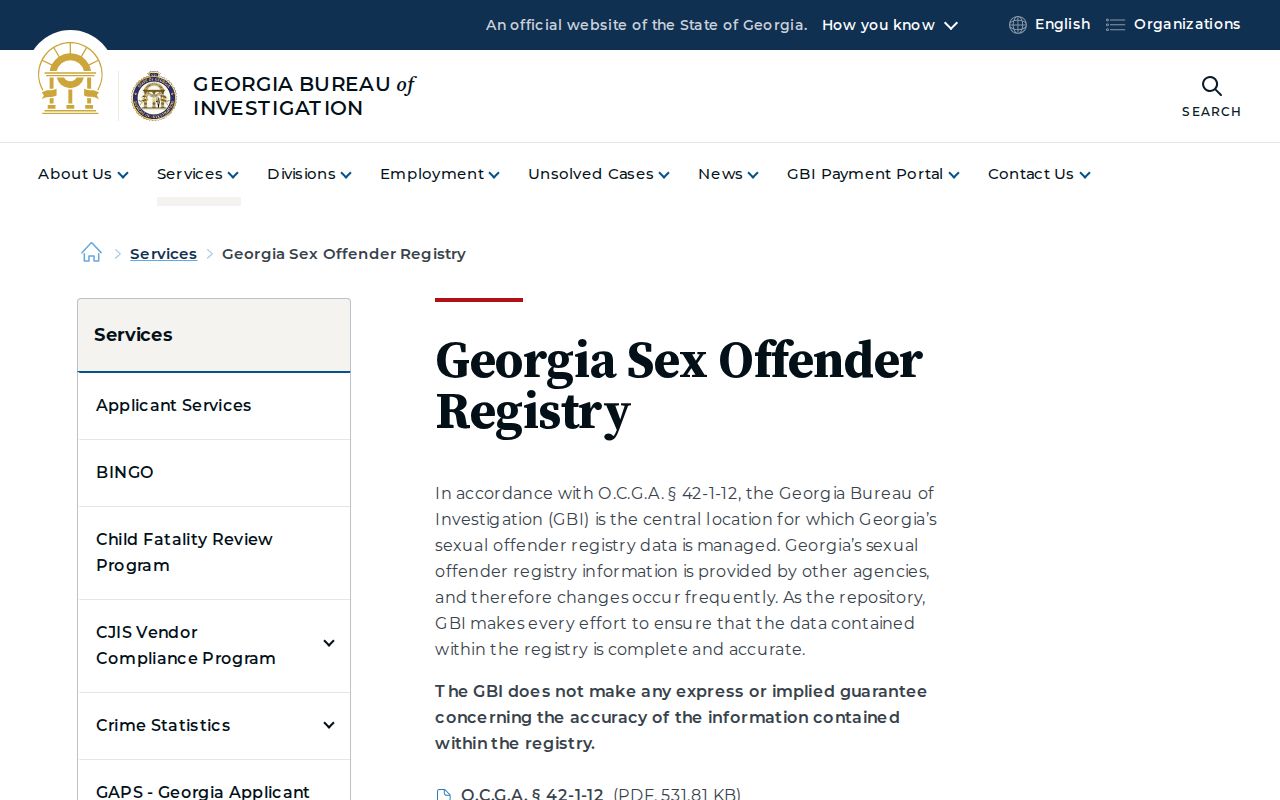
Verify identity carefully. Similar names and stale address facts can cause serious errors, and the registry's stated rules govern use.
DeKalb Business and License Names
A business trail can connect a trade name with official filing names. Georgia's Corporations Division Business Search may show the legal entity, control number, status, entity type, principal office, registered agent, and filing history. A registered agent accepts legal papers and is not automatically the owner. Local permit or license records may then connect the entity to a DeKalb County premises and dated applicant.
The Secretary of State's professional license verification searches by profession, license type, first and last name, license number, and location filters. A result can show license type, status, issue or expiration facts, and published discipline links. It reflects a professional record, not a private residence. Compare the exact name and license number before relying on it.
Municipal records add a local layer. A permit may list a dated applicant, contractor, owner, work type, and site address. An alcohol or business license can connect a legal entity or trade name with a premises. Request those records from the city that issued them. DeKalb County includes many incorporated cities, so a countywide portal should not be assumed to contain each city filing.
These focused official records are more transparent than commercial compilations, which may merge identities or hide their source. Certified records come only from the responsible custodian.
DeKalb Voter Lookup Has Limits
Georgia My Voter Page lets a voter verify their own registration, polling place, precinct, districts, sample ballot, and absentee status after entering identifying data. It is not an unrestricted DeKalb County people search. Public voter-list orders follow separate state rules, omit protected identifiers, and may not expose a VoteSafe address.
Inactive status also needs care. It can reflect address or contact maintenance and does not by itself mean the voter cannot vote. The end-to-end lookup, protected-field split, county office fallbacks, and list-order limits are addressed in the DeKalb County voter records resource.
Unclaimed Property Finds DeKalb Names
Unclaimed property can reveal a dated name and address link when funds or property were turned over to the state. Georgia's official program is the safe starting point. A match is a lead to be verified through the claim process, not proof that a person still lives at the reported address.
The Georgia Department of Revenue Unclaimed Property Program provides the official search route:
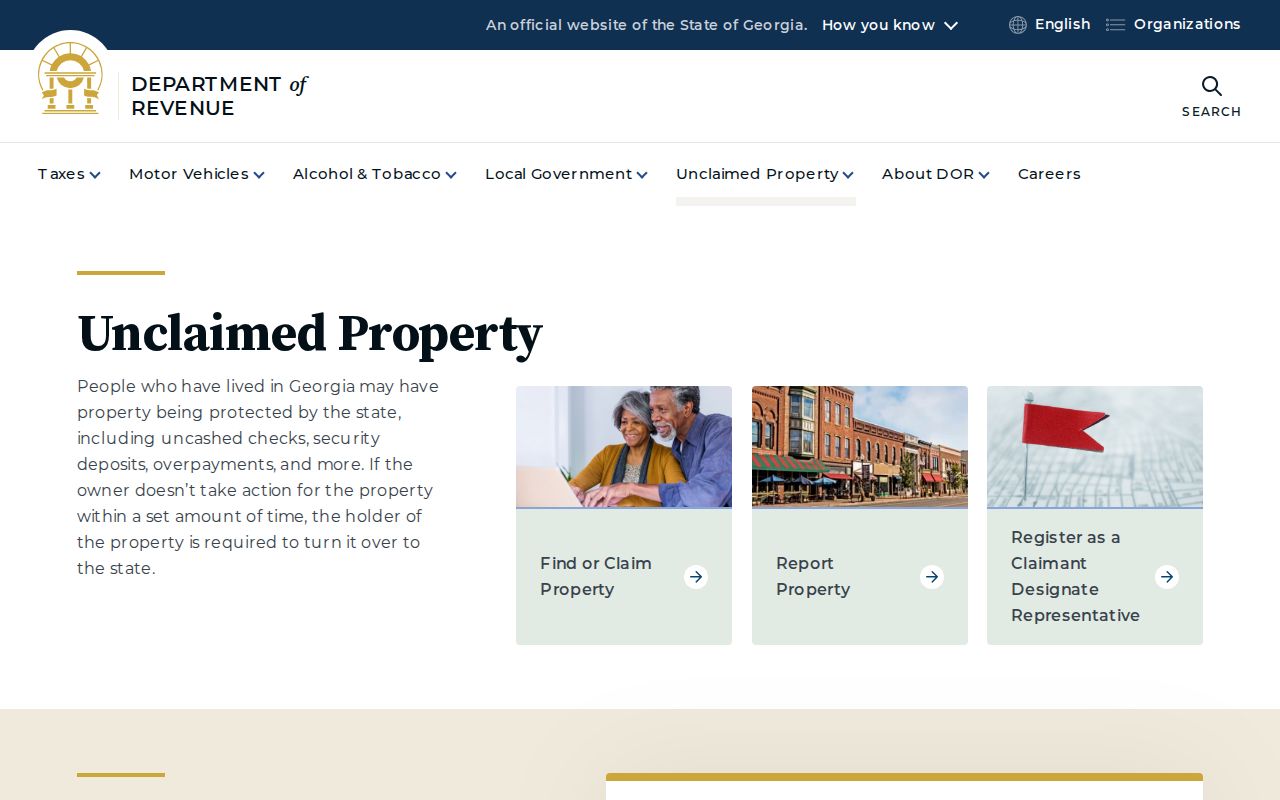
Use the state route rather than an advance-fee solicitation. If a likely match appears, follow the agency's identity and claim instructions and compare the reported address with dated DeKalb County property, directory, or probate evidence.
The DeKalb 1842 Records Break
DeKalb County's early record trail has a real break. A courthouse fire destroyed most official material before 1842. DeKalb History Center reports that the sole surviving official county ledger covers Superior Court cases tried from 1836 through 1843. Its special collections also preserve scattered land, deed, mortgage, sheriff-sale, jury, inferior-court, and oath material, plus an 1820 land-lottery plat and deed.
This history changes the search method. No modern index result can settle whether an early event happened. Searchers must compare the survivor, later deeds that recite prior transactions, land-lot abstracts, private donated papers, state series, and parent-county material. Landmark's 1979 start is another access boundary, not the start of DeKalb deeds. For a pre-1979 chain, find a later online instrument, read its prior-deed citation, then step back through book and page at the courthouse or archive.
Note: Silence in a web index is weak evidence when the event predates its coverage or the record keeper changed with county boundaries.